
How Often Should I Run My Irrigation System in Florida?
If you live in Florida, you’re already aware that maintaining a green lawn and landscape can be a year-round challenge. Between the heat, humidity, and unpredictable rain patterns, it’s not always clear how often to run your irrigation system to keep your plants thriving without wasting water.
At IrriGators LLC, one of the most common questions we hear from homeowners is: “How often should I run my irrigation system?” The answer depends on several key factors, including the time of year, the type of grass, your soil, and the amount of sun your yard receives.
Let’s break it down so you can water smarter, not harder.
The Florida Climate Factor
Florida’s warm, subtropical climate presents unique irrigation needs. From the dry months of spring to the torrential rains of summer, understanding your environment is the first step in determining how often to run your irrigation system.
Here’s what makes Florida lawns tricky:
- High humidity can mask signs of plant stress.
- Afternoon rainstorms might not be enough to soak the soil.
- Sandy soils in many Florida regions drain water quickly.
- Municipal watering restrictions may limit the number of days for watering.
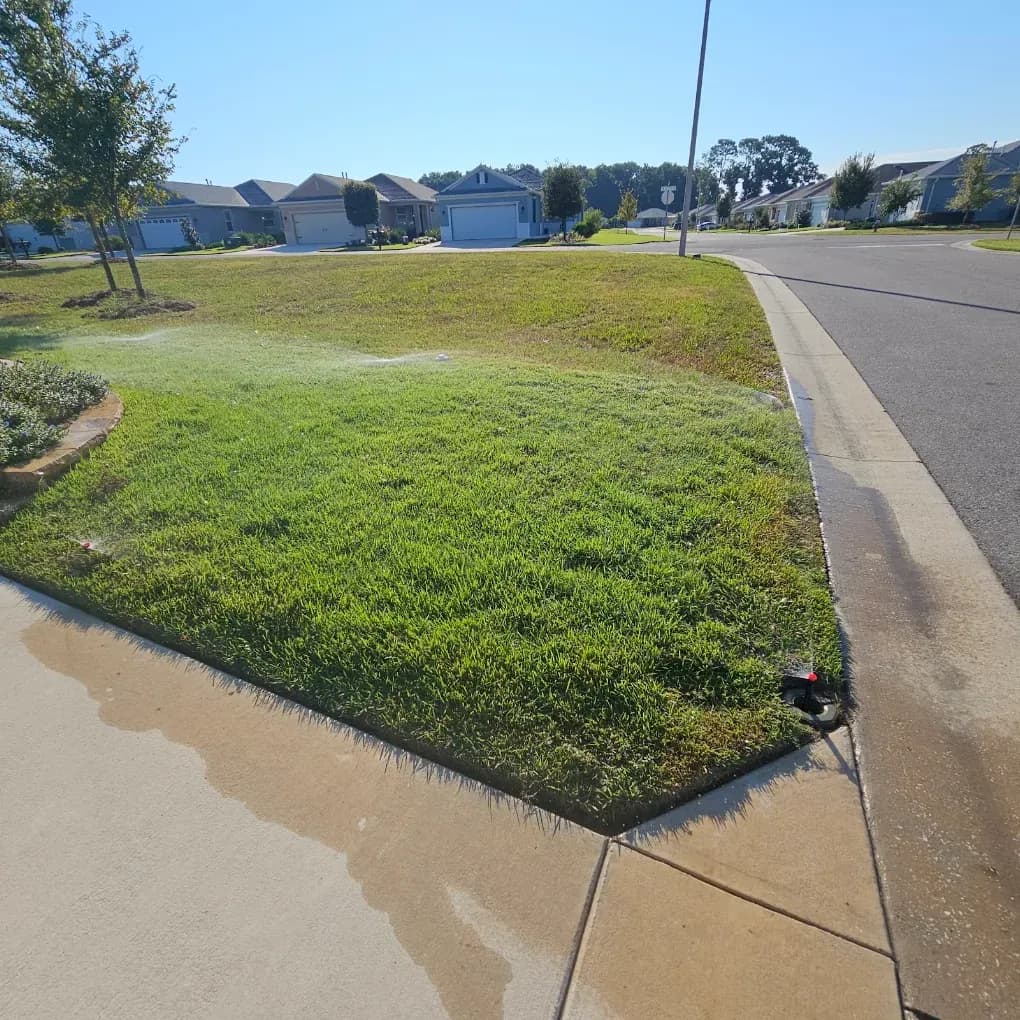
All of these conditions indicate that your irrigation schedule must be both strategic and seasonal.
General Guidelines by Season
The number of days per week you should run your irrigation system will vary depending on the season. Here’s a quick breakdown to help you plan your watering schedule year-round:
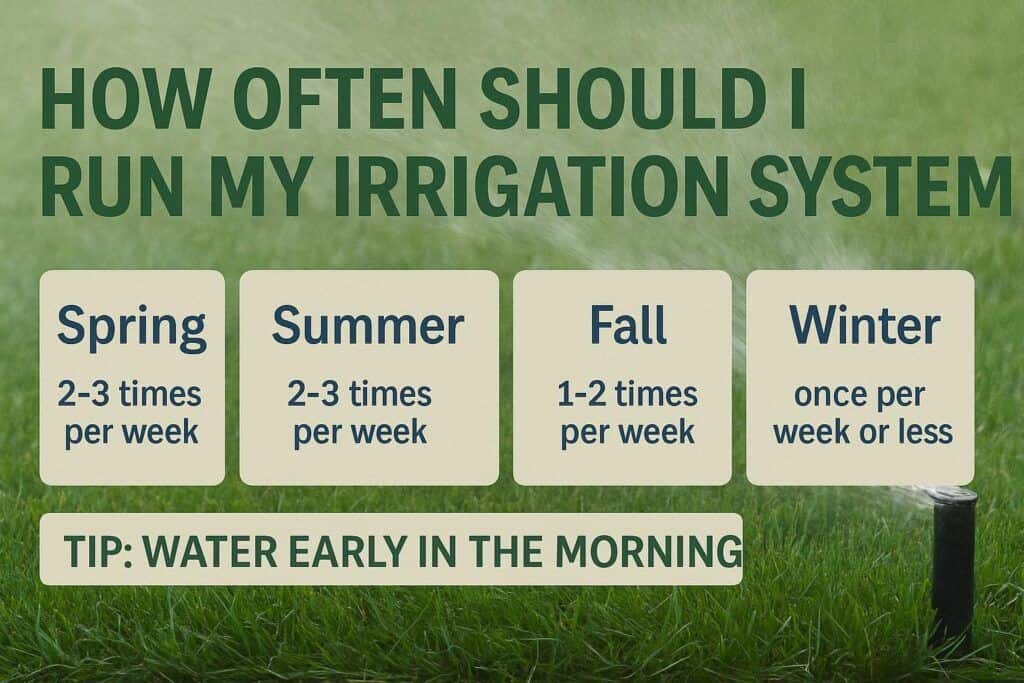
In the spring (March through May), aim to water your lawn two to three times per week. This is when growth kicks into gear, and your landscape requires a bit more support after the winter season.
During the summer months (June through August), limit watering sessions to two to three per week, and avoid overwatering. Florida’s summer rain often supplements your lawn’s needs, so monitor it closely and adjust as needed.
In the fall (September through November), you can begin to scale back to once or twice per week. As temperatures cool and days shorten, your lawn won’t need as much moisture.
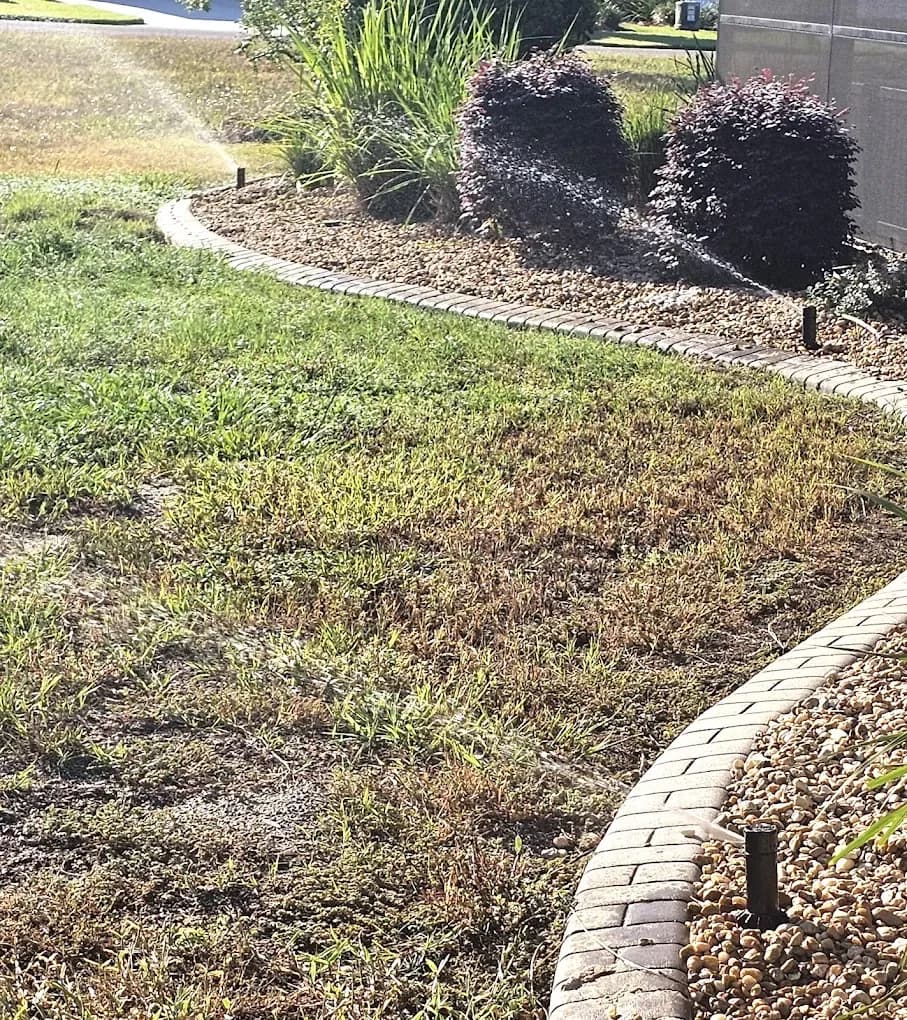
In winter (December through February), most Florida lawns require watering only once a week, or even less. Some homeowners can turn off their system entirely depending on rainfall.
No matter the season, always try to water early in the morning — ideally between 4:00 AM and 8:00 AM — to minimize evaporation and fungal growth. For more seasonal tips, check out our guide on when to turn your irrigation system off.
Your Grass and Plants Matter
The type of grass or plants in your yard plays a big role in how often your irrigation system should run. In Florida, the most common turf grasses include:
- St. Augustinegrass: Requires more frequent watering. Water when blades start to fold or turn bluish-gray.
- Zoysiagrass: More drought-tolerant, needs less frequent watering.
- Bermudagrass: Thrives in full sun but dries out quickly without rain.
- Bahia: Low-maintenance and drought-tolerant, great for larger areas.
For landscapes featuring shrubs, flower beds, or tropical plants, ensure you’re using separate irrigation zones with tailored run times. Flower beds often need less frequent but deeper watering compared to lawns.
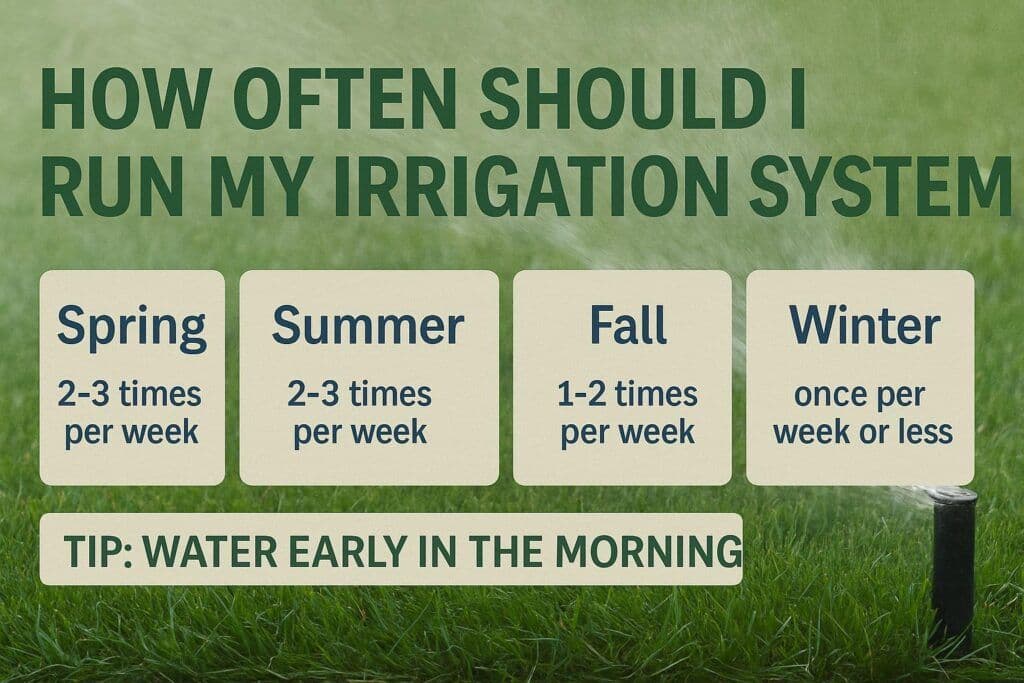
Soil Type and Sun Exposure
Not all lawns are created equal, especially when it comes to the soil underneath.
- Sandy soils (common in Florida) drain quickly and may require shorter, more frequent watering.
- Loamy soils retain moisture better, so they may need less frequent irrigation.
- Clay-heavy areas (less common in Florida) can hold water longer but are prone to runoff if overwatered.
Sunlight also plays a role. Grass in shaded areas will need less water than grass in full sun. It’s not uncommon to water shaded zones for half the time of sunny ones. The most efficient irrigation systems utilize smart controllers or soil moisture sensors to automatically adapt watering based on these variables.
Signs of Overwatering and Underwatering
Not sure if you’re watering too much or not enough? Here’s what to look for:
Overwatering
- Mushy or soggy soil
- Fungal growth or mushrooms
- Yellowing grass with weak roots
- Pooling or runoff after irrigation
Underwatering
- Wilting or crispy grass blades
- Grass turns bluish-gray
- Footprints remain in the lawn longer than normal
- Soil pulls away from hardscapes or house edges
Finding the right balance is key — overwatering can be just as harmful as underwatering, especially in Florida’s humid climate.
Tips for Running Your Irrigation System Efficiently
No one wants to waste water — or money. Here’s how to make your irrigation system more efficient year-round:
- Use rain sensors: Florida law requires all automatic irrigation systems to have a rain sensor. These stop your system from running after it rains.
- Inspect your system regularly: Broken sprinkler heads or leaking valves waste water and cause inconsistent coverage.
- Check your timer or controller: Ensure your system is running at the correct time and for the specified duration.
- Adjust for seasons: Many homeowners forget to scale back in the winter, leading to overwatering.
- Use drip irrigation for beds: Drip lines reduce evaporation and deliver water directly to the root zone, ensuring optimal water use.
- Install smart irrigation technology: Weather-based controllers automatically adjust run times based on rain, temperature, and soil moisture.
So, How Often Should You Run It?
Here’s the bottom line:
Most Florida homeowners should run their irrigation system 2–3 times per week during hot months and scale back to once a week or less during cooler months.
However, a one-size-fits-all answer doesn’t apply to every yard. That’s why the best way to know for sure is to have your system professionally evaluated. At IrriGators LLC, we offer customized irrigation inspections and maintenance plans to help homeowners maximize the benefits of their system while conserving water and ensuring compliance with local regulations.
Need Help Optimizing Your Watering Schedule?
At IrriGators LLC, we’ve helped hundreds of Florida homeowners improve the health of their lawns and gardens while reducing their water bills. Whether you need a full system install, a seasonal tune-up, or just want help figuring out how often to run your irrigation system, we’re here to help. We proudly serve Clearwater, Tampa, St. Petersburg, and the surrounding areas.
Contact us to request a quote, and let’s ensure your yard receives exactly the water it needs.
Frequently Asked Questions
How often should I run my irrigation system in Florida during summer?
In most cases, two to three times per week is ideal. Just make sure to water early in the morning and adjust your watering schedule accordingly based on rainfall.
How long should I run my sprinklers each time?
Aim for 20–30 minutes per zone for turf grass. Flower beds or drip zones may require longer but less frequent sessions.
Is it okay to water at night?
No. Watering at night increases the risk of fungal, mildew, and disease development. Stick to early morning hours for best results.
Can I skip watering if it rained yesterday?
Yes. In fact, you should. A rain sensor or smart controller will help ensure you don’t overwater after a storm.
What’s the most efficient irrigation system?
Smart systems with rain sensors and soil moisture technology offer the most water-efficient solution. Drip irrigation for garden beds is also very effective.
< Older Post
Not sure what's wrong with your system?
Start with the 20-point inspection. You get a written report either way.