
Hard Water in Central Florida, and What a Water Softener Actually Fixes
Central Florida sits on limestone. Rain works its way down through it, picks up calcium and magnesium on the way, and that is the water that comes out of your tap. It is perfectly safe to drink. It is also hard, and hard water leaves evidence all over a house.
How to tell you have it
- White crust on faucets, shower heads and the kettle
- Spots on glasses and cutlery straight out of the dishwasher
- Soap and shampoo that will not lather, and a film left on skin
- Towels and clothes that feel stiff after washing
- A water heater that has got noisier or slower over the years
- Scale in the toilet tank and around the sink drain
One of those on its own might be nothing. Four or five of them together is hard water, and it is worth knowing the actual number rather than guessing from the symptoms.
What it costs you if you leave it
Scale is an insulator. Inside a water heater it sits between the element and the water, so the heater runs longer to reach the same temperature and works harder every year it stays there. In pipework it narrows the bore. In fixtures it wrecks the seals and the finish.
The plumbing bill from hard water is rarely one dramatic failure. It is a water heater that dies years early, faucets replaced more often than they should be, and appliances that never quite perform the way they did when they were new.
What a softener does — and what it does not
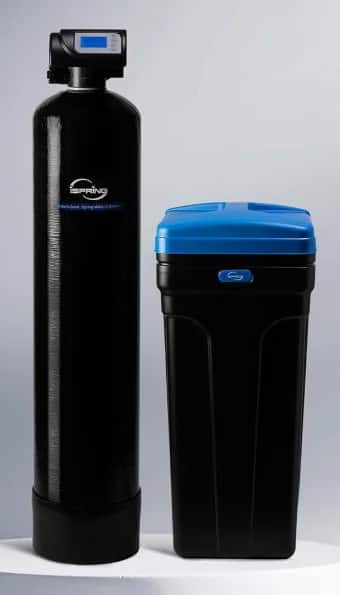
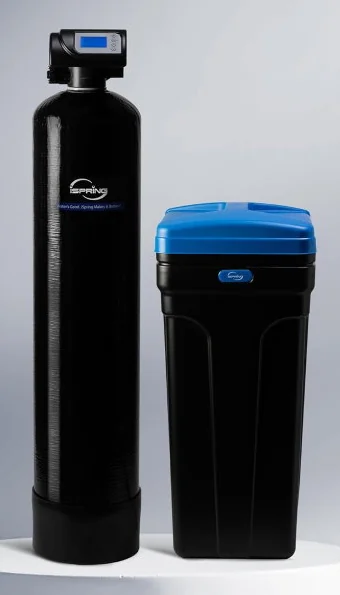
A softener swaps the calcium and magnesium out of the water for a small amount of sodium. That stops the scale forming, which is what protects the water heater, the pipes and the fixtures, and it is why soap starts lathering properly again.
What it is not is a filter. Softening is not the same job as removing sediment, sulphur smell, iron staining or chlorine taste. Those need their own treatment, and anyone selling you a softener as the answer to all of them is overselling it. If your complaint is a rotten-egg smell or orange staining, say so when you call — that is a different fix.
Softeners and irrigation are not the same water
This one catches people out. You do not want softened water going to your irrigation system: the plants have no use for it, the sodium does your soil no favours, and you would be paying to soften water that is about to be sprayed on a lawn.
A softener should be plumbed so that it treats the house and leaves the outside spigots and the irrigation supply on raw water. Getting that split right at installation is most of the job, and it is the part a general handyman most often gets wrong.
Free water test on an irrigation service call
If we are already at your property working on the sprinklers, we will test your water while we are there and tell you what is actually in it — no extra charge, no appointment, no obligation to buy anything.
We would rather you had the number in front of you. Plenty of people find out their water is only moderately hard and decide a softener is not worth it, and that is a fine outcome. It is a better basis for a decision than a sales pitch.
Installation and repair
We are a licensed plumbing contractor, so the same crew that services your irrigation can install or repair the softener — you are not coordinating two trades. We work on existing units as well as new installs: a softener that has stopped regenerating, is using salt far too fast, or has quietly done nothing for a year is usually a valve or a resin problem rather than a replacement.
Full details are on our water softener install and repair page. If your well pump is misbehaving as well, well and irrigation pump repair covers that. Call 352-789-0913 and we will reply the same business day.
Not sure what's wrong with your system?
Start with the 20-point inspection. You get a written report either way.